 EN
EN
Diffusers HVAC One-Stop Supporting Series Lowers Matching Difficulty for Engineering Contractors
Engineering procurement managers consistently identify component alignment as one of the more stubborn friction points in HVAC system projects. When specifying diffusers for a commercial or industrial build, contractors frequently find themselves sourcing from multiple suppliers just to cover the size range, discharge pattern, and static pressure requirements a single project demands. A purpose-built diffusers HVAC one-stop supporting series addresses this directly by consolidating the required product range under a single, consistently documented supplier.
Why Diffusers HVAC Specification Matching Is More Complex Than It Appears
Selecting the right diffusers HVAC components for a project is rarely a single-step decision. Engineers typically work from ASHRAE 62.1-based ventilation load calculations, which feed into a cascade of interdependent parameters: airflow capacity in cfm, throw distance, noise criteria (targeting below 35 NC for occupied spaces), neck velocity, and static pressure requirements. Each of these factors influences the others. A diffuser that satisfies the airflow requirement may fail the noise threshold at that velocity. One that meets the throw specification at standard ceiling height may underperform when mounted more than two feet below the ceiling — a common installation scenario where throw should be derated by approximately 30 percent.
This complexity multiplies for contractors managing multiple concurrent projects. Each building type brings different ceiling geometry, occupancy density, and aesthetic requirements: commercial office, industrial facility, hotel lobby. Sourcing diffusers HVAC components piecemeal from vendors with incomplete size series or inconsistent product data turns specification alignment into a manual exercise that repeats on every project. The more fragmented the sourcing, the higher the coordination overhead.
The Risk in Fragmented Diffusers HVAC Sourcing
Fragmented sourcing carries a category of risk that is easy to underestimate until it shows up on a live project. Contractors who have worked across multiple HVAC projects will recognize the pattern: a supplier confirms stock at the inquiry stage, then revises delivery timelines after the purchase order is placed. Or a product arrives with dimensional tolerances that vary between batches, creating fitment problems at the installation interface. These are not extraordinary failures; they are predictable outcomes of sourcing diffusers HVAC products from vendors who lack a complete, well-documented product range.
Experienced procurement professionals have generally developed responses to this: add buffer time, carry safety stock, invest more heavily in supplier pre-qualification. Each approach is valid, but each adds cost. A more efficient path is to consolidate specification and procurement around a supplier whose diffusers HVAC product line is designed as a coherent series from the start, with consistent dimensional standards, performance data, and accessory compatibility across the range.
What a One-Stop Diffusers HVAC Series Covers in Practice
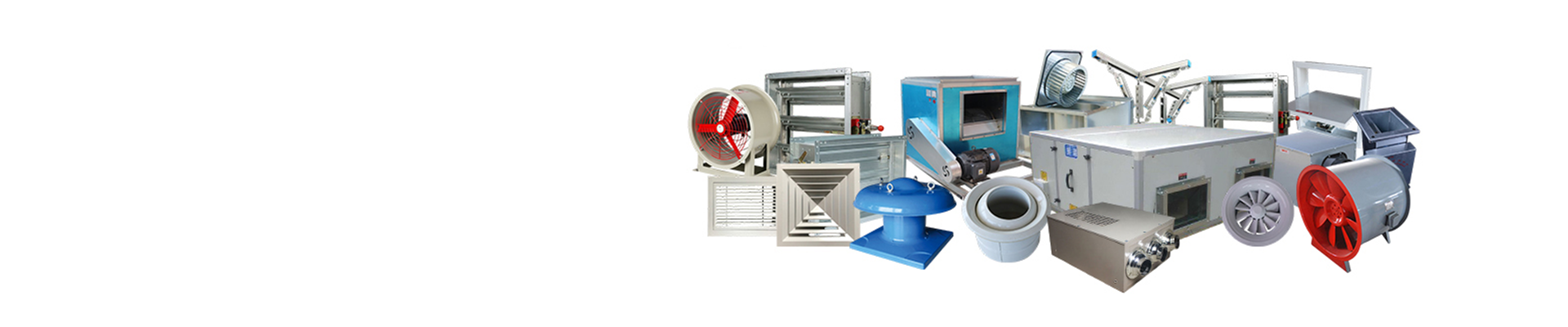
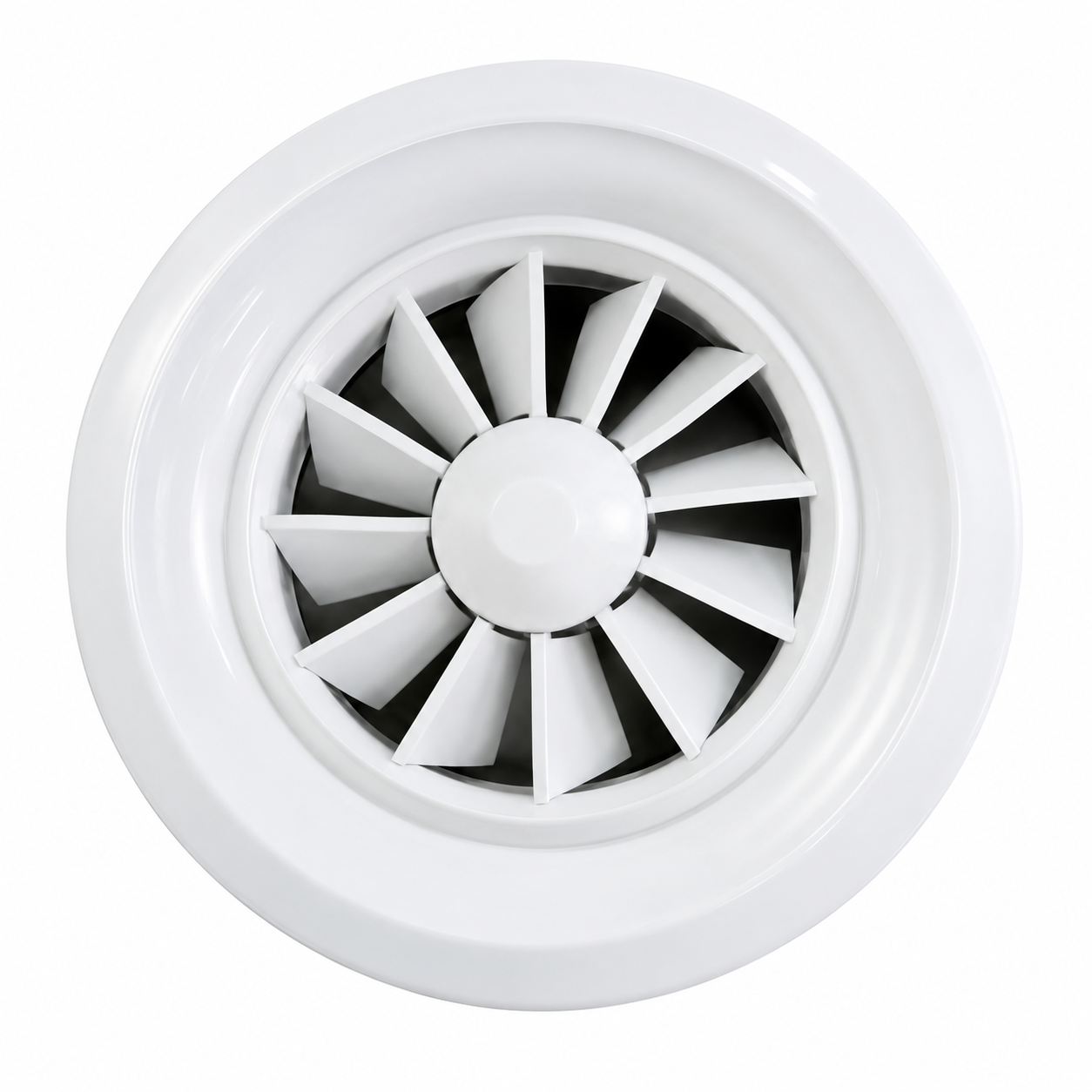
A well-designed supporting series for diffusers HVAC applications covers the range most engineering projects realistically require: square and round ceiling diffusers across a consistent size matrix, adjustable models for post-installation airflow tuning, linear slot diffusers for architectural ceilings, and compatible static pressure boxes for direct plenum connection. The value is not in SKU count alone, but in having consistent standards, documented performance data, and coordinated accessory availability across the full range.
Hongpeng's diffusers HVAC product line is built on this logic. With over 30 years of manufacturing experience in ventilation equipment and ISO-certified production processes, the series covers diffuser types suited to commercial, industrial, and specialty applications. Multiple material options — galvanized steel, aluminum, and stainless steel — address different installation environments, including those requiring higher corrosion resistance. The complete size series means a contractor can specify across an entire project without switching to a secondary supplier mid-way through.
Contractors dealing with design revisions or non-standard ceiling dimensions will generally benefit from identifying a supplier with custom-size capability early in the project timeline. Standard-size diffusers HVAC components carry shorter lead times and lower per-unit costs; non-standard configurations need additional production lead time. Knowing which project elements can be fulfilled from standard stock and which require custom production is usually more useful than trying to fit all specifications into standard dimensions.
Technical Support as Part of the Diffusers HVAC Procurement Decision
For engineering contractors specifying less familiar diffusers HVAC configurations or entering new building types, supplier-side technical support during the inquiry phase can meaningfully reduce the specification iteration cycle. Confirming airflow parameters, clarifying installation constraints, or verifying that a given diffuser configuration meets a project's NC target before committing to an order is worth more than a marginally lower unit price from a vendor who cannot provide that support.
Suppliers with genuine product knowledge can also provide CAD documentation and technical datasheets in formats that integrate directly into design workflows, reducing back-and-forth between the design team and procurement. For time-sensitive projects, this risk reduction is more useful than price negotiation alone. OEM and ODM capability further extends flexibility for contractors or distributors developing their own branded product offering.
Practical Steps to Consolidate Diffusers HVAC Sourcing
If current practice involves three or more suppliers per project to cover the required diffusers HVAC range, it is worth testing whether a single comprehensive series can consolidate that. The evaluation is straightforward: does the series cover the typical size range, discharge pattern requirements, and material specifications without gaps? Does the supplier hold consistent stock on standard configurations, provide verifiable lead times on non-standard items, and offer responsive technical support at the inquiry stage?
For contractors working on export projects or in markets with specific certification and documentation requirements, confirming that the supplier's compliance support aligns with target market requirements before project commitment is standard practice. ISO-certified manufacturing and documented quality control processes provide a baseline assurance on production consistency, which matters when multiple delivery batches need to arrive with matching tolerances for large-scale installations.
A purpose-built supporting series from a manufacturer with complete diffusers HVAC product coverage, technical support capability, and stable production output provides a more reliable procurement foundation than assembling project specifications from multiple partial-range suppliers. For engineering contractors working to reduce coordination overhead and specification risk, that consolidation is where the practical efficiency gain lies.
 Hot News