Supermarkets have unique HVAC challenges compared with typical commercial buildings. Large open areas, high ceilings, frequent door openings, refrigeration equipment, and changing customer flow create complex indoor airflow conditions.
A properly designed commercial HVAC diffuser system helps distribute conditioned air evenly throughout the sales area, reducing uncomfortable hot and cold zones while supporting energy-efficient operation.
Without effective air distribution, supermarkets may experience uneven temperatures, poor air mixing, and increased HVAC workload. Precision air supply design is therefore essential for maintaining customer comfort, protecting products, and improving system reliability.
One of the main challenges in supermarket HVAC design is thermal stratification.
In high-ceiling retail spaces, warm air naturally rises while cooler air remains closer to occupied areas. Without proper airflow management, temperature differences may develop between ceiling areas and shopping zones.
Supermarkets also experience constantly changing cooling loads. Heat generated by lighting, refrigeration equipment, entrance doors, and customer movement can change throughout the day.
A standard air supply approach may not always respond effectively to these variations. Commercial HVAC diffusers designed for retail applications help improve air mixing and deliver conditioned air where it is needed.
Poorly matched air supply can create several operational issues.
When airflow distribution is uneven, some areas may become overcooled while others may not receive enough conditioned air. This can reduce customer comfort and make HVAC control systems work harder to maintain target temperatures.
In supermarkets with open refrigeration cases, uncontrolled airflow movement may also affect local temperature conditions around display equipment.
A properly selected diffuser helps balance airflow patterns, improve air circulation, and support stable indoor conditions.
Different diffuser designs create different airflow characteristics. The right choice depends on ceiling height, store layout, cooling requirements, and installation conditions.
Pressure-independent diffusers are designed to maintain more stable airflow even when duct pressure changes. This can be useful in commercial buildings where airflow demand changes across different zones.
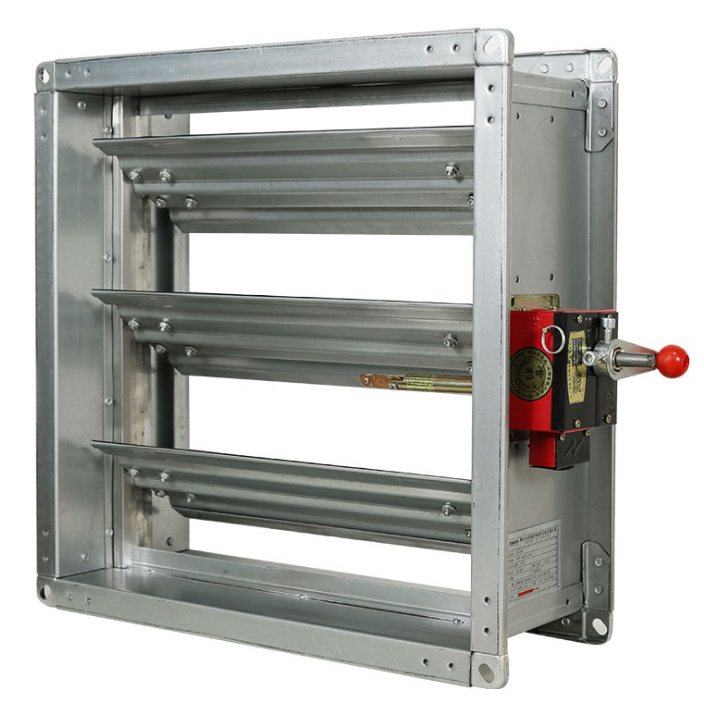
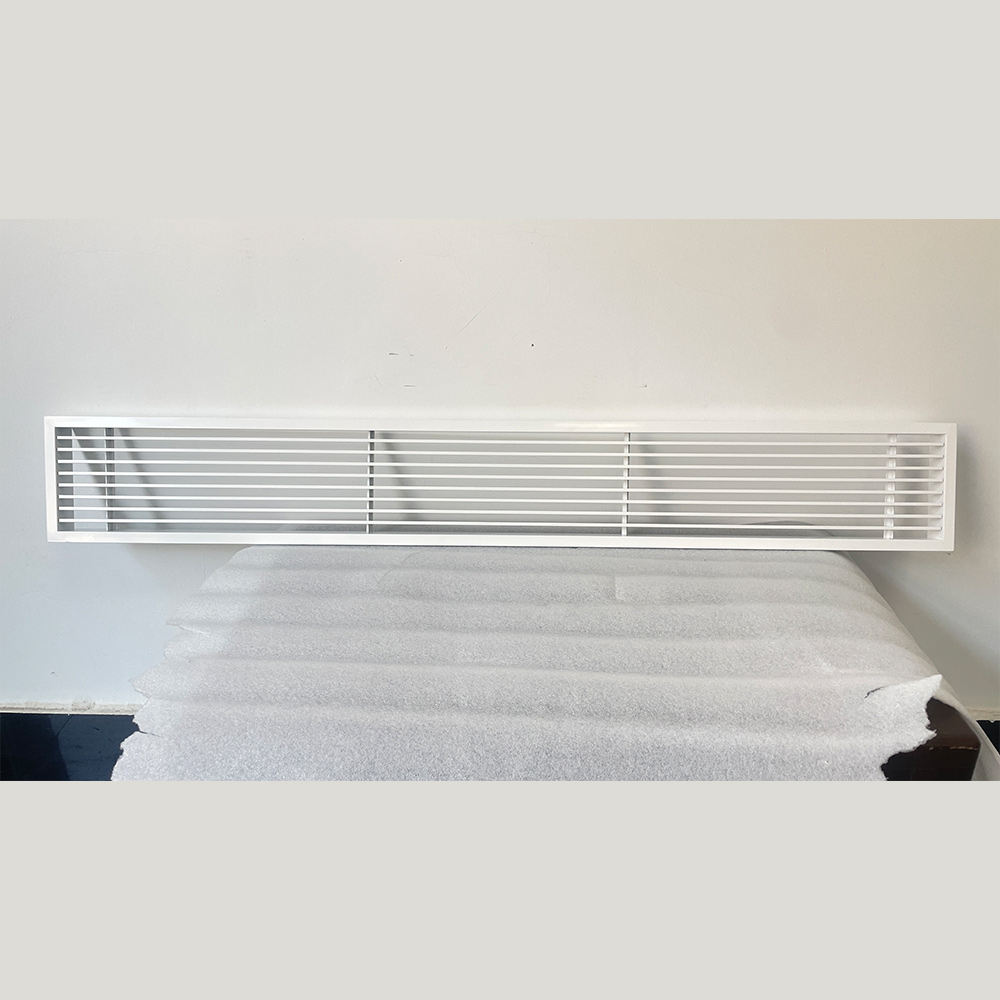
Adjustable vane diffusers allow installers to modify airflow direction and distribution patterns during commissioning. This flexibility helps engineers optimize air movement according to the actual supermarket layout.
For large retail spaces, diffuser selection should focus on airflow performance rather than appearance alone.
High-ceiling supermarkets require diffusers that can effectively mix air throughout large spaces.
Radial vane or swirl-style diffusers create a rotating airflow pattern that promotes air mixing and helps reduce temperature differences between occupied areas.
Four-way ceiling diffusers are commonly used in many commercial applications and can work well when ceiling height and airflow requirements are suitable. However, additional design consideration may be needed in large open spaces.
Adjustable jet or eyeball diffusers provide directional airflow control and may be suitable for specific applications where targeted air movement is required.
The best diffuser type depends on building structure, airflow requirements, and the overall HVAC design.
Even a high-performance diffuser cannot deliver optimal results without correct installation.
HVAC engineers should consider:
Airflow volume requirements
Ceiling height
Diffuser spacing
Room layout
Potential airflow obstructions
Coordination with refrigeration equipment
Commissioning after installation helps verify airflow direction, balance, and overall system performance.
CFD analysis can also be used for complex supermarket projects to evaluate airflow patterns before implementation and improve design accuracy.
Regular maintenance is important for keeping commercial HVAC diffuser systems operating effectively.
Dust accumulation, blocked diffuser surfaces, incorrect damper settings, and changes in building usage can affect airflow performance over time.
Routine inspection and system adjustments help maintain balanced air distribution and support long-term HVAC efficiency.
When choosing HVAC diffusers for supermarkets, decision-makers should evaluate:
Store size and ceiling height
Required airflow capacity
Cooling load characteristics
Noise requirements
Installation environment
Maintenance accessibility
Working with an experienced HVAC diffuser supplier helps ensure that products are selected according to real project conditions and performance requirements.
Supermarkets have large spaces, changing occupancy levels, and refrigeration-related cooling challenges. Proper diffuser design helps achieve more balanced airflow distribution.
Radial vane and swirl diffusers are often considered for large spaces because they provide strong air mixing performance. The final choice depends on project requirements.
Uneven airflow can create uncomfortable areas, reduce temperature consistency, and increase HVAC system workload.
Commissioning ensures that airflow direction, volume, and distribution match the original HVAC design objectives.
 Hot News
hongpeng provides certified smoke exhaust fans, fire dampers, and axial flow fans for industrial ventilation systems. ISO-certified, 30-year OEM/ODM expertise, global export support.
No. 19, Courtyard No. 5799, North Side of National Highway 308, Materials Industry Park, Sangdian Town, Tianqiao District, Jinan City, Shandong Province
Copyright © 2025 by Jinan Huifengquan Building Materials Trading Co., Ltd. Privacy Policy
 EN
EN