
 EN
How fire damper temperature sensing piece triggers automatic closing under fire conditions?
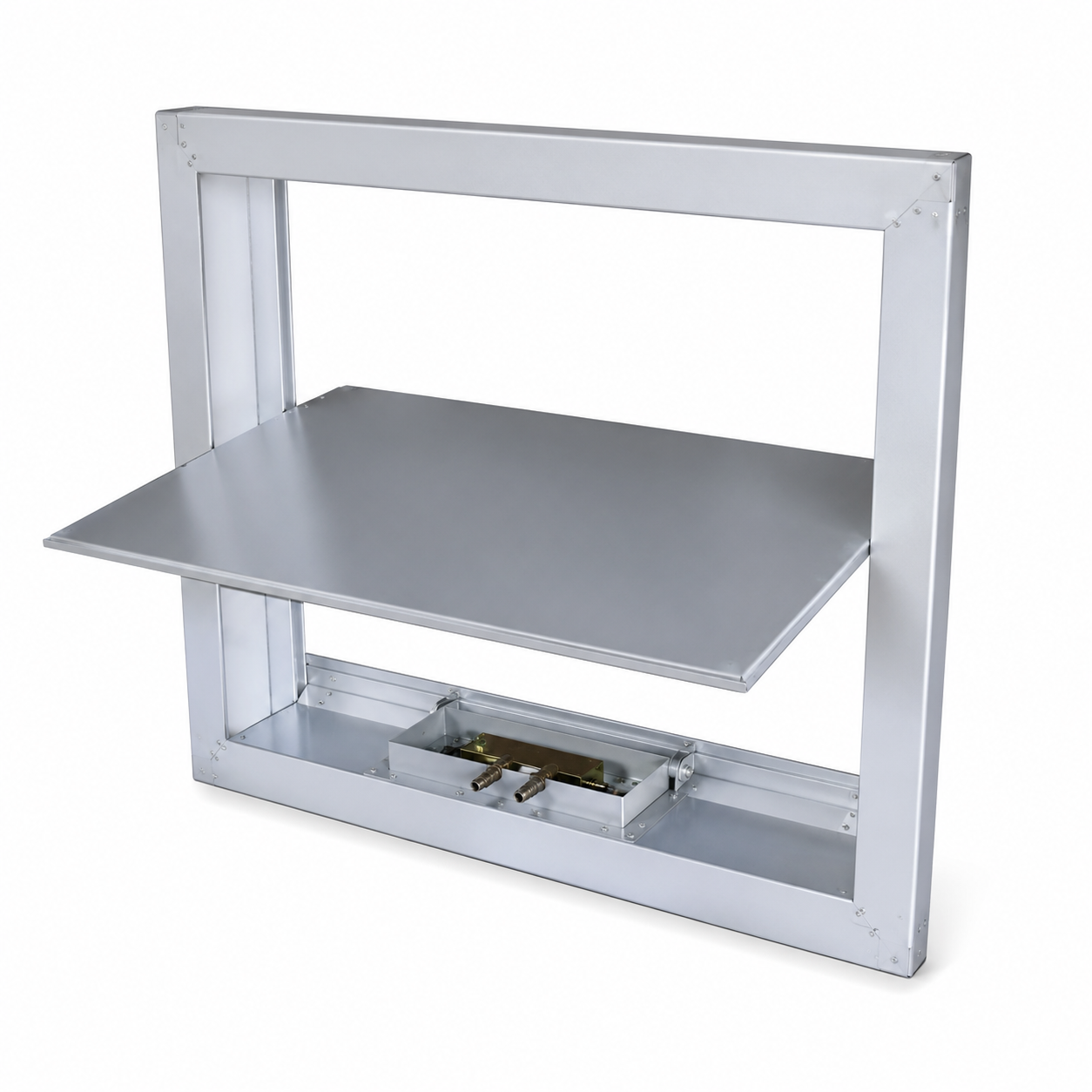
A fire damper is a passive life-safety device installed where an HVAC duct penetrates a fire-rated wall, floor, or partition. It remains open for normal air movement, then closes when heat indicates that a fire could use the duct opening as a path. The small temperature sensing piece is usually a fusible link. Although it is compact, it is the release point for a carefully balanced mechanical system.
From an HVAC engineering viewpoint, the useful question is not simply “does the link melt?” It is what the released link allows the damper to do. A correctly selected, installed, and maintained fire damper changes from an open airflow path to a closed barrier without needing an operator to reach the unit during an emergency.
The temperature sensing piece is normally a fusible link
In many mechanical fire damper designs, the temperature sensing piece is a heat-responsive fusible link fitted into the blade-retaining mechanism. The link is made from elements joined by a heat-sensitive alloy. At normal duct temperatures, it remains intact and holds the damper in its open, ready position. Springs, gravity, or a combination of both are already arranged to drive the blades closed; the link is what restrains that stored closing force.
A commonly encountered fusible-link rating is 165°F (74°C). That figure is an example, not a universal design setting. Link temperature classifications and damper listings vary with the assembly, location, code requirements, and equipment arrangement. The nameplate, approved submittal, and the applicable installation instructions govern the correct replacement link.
What happens from heat exposure to blade closure
- The duct opening operates normally. The fire damper blades are held open so the ventilation system can move air as designed.
- Heat reaches the sensing element. During a fire, hot gases raise the temperature around the fusible link. The important condition is actual heat at the device, rather than a remote alarm signal alone.
- The fusible link releases. Once its rated response temperature is reached, the alloy joint separates. The link no longer holds the latch, blade stack, or retaining arms in the open position.
- Stored closing force takes over. A spring-loaded mechanism drives the blades shut, or gravity closes them in a gravity-operated arrangement. This is why a fire damper can close automatically even when no one is present.
- The blades form the intended barrier. The closed blade assembly restricts the opening through the rated construction, helping limit the passage of flame and hot gases through the duct penetration.
NFPA guidance describes fire dampers as devices that close automatically upon heat detection, such as by a fusible link or heat detector, to interrupt airflow and restrict flame passage. The exact blade action, orientation, and permitted airflow conditions are determined by the listed damper assembly, not by the link alone.
Why the damper closes instead of merely dropping the link
The link is a trigger, not the power source. Think of it as the pin that keeps a loaded closing mechanism from moving. Once the pin is gone, spring energy or blade weight performs the closure. In a multi-blade fire damper, the first movement may release connected blade arms so that all blades rotate toward the closed position. In a curtain-style arrangement, the released curtain falls and stacks across the opening.
This distinction matters during specification and maintenance. Replacing a link with an incorrect temperature rating, obstructing the blade path, tying open a blade, or modifying the sleeve can defeat a properly designed closure sequence. A fire damper should be evaluated as an assembly: damper, sleeve, retaining mechanism, breakaway connection, access provision, and rated wall or floor penetration.
Temperature sensing versus smoke-control operation
A basic fire damper responds to heat. A combination fire/smoke damper may also use an actuator and smoke-detection or control signal to move blades for smoke management. These are related but different functions. Do not assume that a standard fusible-link fire damper will provide powered smoke-control operation, or that an electrically actuated unit eliminates the need to follow its listed heat-response requirements.
For projects involving fans that continue to operate during a fire, the designer must select a damper listed for the expected airflow and pressure conditions. Static and dynamic ratings address different application conditions. The project documents and approved damper schedule should identify the required type before procurement.
Practical checks for reliable automatic closing
- Verify that the fire damper model, rating, and mounting orientation match the approved drawings and listing.
- Confirm that the fusible link temperature rating matches the manufacturer instructions and project requirements.
- Provide access so inspectors can observe the blades, link, latch, and closing travel.
- Keep ducts, insulation, fasteners, cables, and field modifications clear of moving parts.
- During inspection and testing, follow the authority having jurisdiction, manufacturer procedures, and site safety controls; reset or replace components only with approved parts.
What to tell a maintenance team
A concise maintenance note is: the temperature sensing piece holds the fire damper open until heat reaches its listed response point; when the piece releases, the damper’s own closing mechanism shuts the opening. If closure is slow, incomplete, or blocked, changing only the link may not solve the problem. Inspect the complete assembly and document the corrective action.
For ventilation projects, Jinan Hongpeng Ventilation Equipment Co., Ltd. supplies ventilation equipment, fire dampers, and fans. Discuss the application details with a qualified project team so the selected fire damper, installation method, and inspection access align with the applicable listing and local code requirements.
 Hot News